


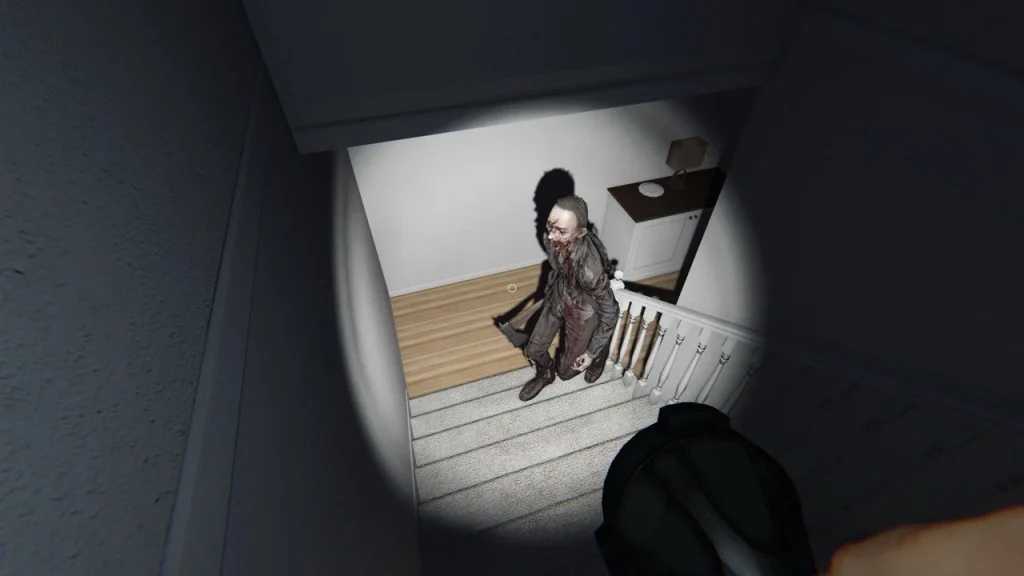
In Phasmophobia, you can identify a ghost type without relying on evidence, using only its unique abilities. This is especially crucial on higher difficulties like Nightmare, Insanity, and beyond, where evidence might be scarce. This guide will help you learn how to recognize ghosts based on their behavior.
Category 1: Speed-Related Ghosts
- Raiju
- Speeds up near active electronic equipment (flashlights, sensors, etc.).
- Can interfere with electronics from a long distance.
- Hunts at 65% sanity if electronics are nearby.
- Does not accelerate when in direct line of sight if electronics are around.
- Moroi
- One of the fastest ghosts when the player’s sanity is at 0%. It can outrun a Raiju near electronics or even a young Thaye.
- The lower your sanity, the faster it hunts.
- Curses through the Spirit Box or Parabolic Microphone, causing faster sanity drain (can be cured with sanity pills).
- Incense blinds it for 12 seconds instead of the usual 6.
- The fastest ghost at 0% sanity.
- Revenant
- Very slow unless it sees a player.
- Instantly accelerates when spotting a player.
- Slows down again once it loses sight of the target.
- Hantu
- Significantly changes speed depending on temperature. In cold rooms (below 0°C), it moves much faster than most ghosts, while in warm areas, it becomes very slow.
- Does not accelerate when in direct line of sight.
- Produces visible freezing breath during a hunt if the fuse box is off.
- More likely to turn off the fuse box.
- Deogen
- Always knows where you are, hiding is impossible.
- Moves extremely slowly when near you.
- Accelerates when far from a player.
- Has a unique sound in the Spirit Box.
- Jinn
- Never turns off the fuse box.
- Speeds up when at a distance and the fuse box is on.
- Drains 25% sanity near the fuse box when triggering an EMF 2 event.
- The Twins
- One ghost moves slower, the other faster.
- They interact with different locations simultaneously.
- Thaye
- Starts young and fast, slows down over time.
- Does not accelerate when in direct line of sight.
- Can change age on the Ouija Board.
Category 2: Ghosts with Visual Clues
- Obake
- Can change model during a hunt.
- Leaves a unique six-finger fingerprint.
- Leaves fingerprints only 75% of the time, unlike other ghosts that always leave them.
- Obake always has fingerprints as evidence. If playing on Nightmare or Insanity and you don’t get fingerprints, you can rule it out.
- Oni
- Never appears as an airball ghost event.
- More visible during hunts (longer visible phases).
- Phantom
- Disappears when photographed during an event.
- Blinks less frequently during hunts (stays invisible longer).
Category 3: Ghosts with Teleportation and Wandering Abilities
- Wraith
- Never leaves footprints in salt.
- Occasionally teleports to a random player, triggering an EMF 2 event.
- Banshee
- Targets only one player at a time.
- Can produce a unique scream on the Parabolic Microphone.
- Follows its target across the map.
Category 4: Early Hunting Ghosts
-
- Raiju – Hunts at 65% sanity near electronics.
- Thaye – Hunts at 75% sanity when young.
- Mare
- Hunts at 60% sanity in darkness, 40% with lights on.
- Instantly turns off lights after they are switched on.
- Demon
- Can rarely hunt at any sanity, even 100%.
- Normal hunt threshold: 70% sanity.
- Incense repels it for only 60 seconds.
- Crucifix range is 5 meters.
- Yokai
- Hunts at 80% sanity if players talk nearby.
- Cannot hear player voices or see flashlights beyond 2.5 meters. This allows for safe whispering or even talking at a certain distance.
- Has poor hearing and vision during a hunt. A good way to test this is to hide in a nearby room and talk. If it doesn’t follow the sound, it’s likely a Yokai.
- Onryo
- Will not hunt near a lit candle (4-meter radius).
- After three extinguished candles, it can hunt regardless of sanity.
Category 5: Other Abilities
- Spirit
- Cannot hunt for 3 minutes after being affected by incense.
- Poltergeist
- Throws objects more frequently and can throw multiple objects at once or with great force.
- Constantly throws objects during a hunt.
- Myling
- Quieter during hunts (footsteps audible from 12 meters).
- More talkative on the Parabolic Microphone.
- Yurei
- Drains 15% sanity by slamming a door.
- Stays in its room after being affected by incense.
- Shade
- Will not hunt if players are nearby.
- Rarely active, often triggers airball ghost events.
- Goryo
- Visible in the D.O.T.S. projector only through a video camera.
- Does not change rooms.
- The Mimic
- Can mimic the abilities of any ghost.
- Has fake Ghost Orbs as additional evidence.
- Can change ghost type every 30-120 seconds, making its behavior unpredictable.
Ghost Testing Methods
How to Identify Ghosts Without Evidence:
- The Mimic → Check for Ghost Orbs, even if evidence is turned off.
- Obake → Inspect fingerprints: if they don’t always appear, it’s likely an Obake.
- Onryo → Place candles near a crucifix. If the ghost doesn’t hunt while the candles are lit, it’s an Onryo.
- Deogen → Try to hide. If it immediately finds you, it’s a Deogen.
- Yokai → Talk during a hunt and check if it hears you.
- Demon → If the ghost hunts very early, even at 100% sanity, it’s likely a Demon.
- Raiju → Turn on electronic equipment and see if it speeds up near it.
- Hantu → Turn off the fuse box and observe if its speed changes.
Conclusion
Understanding ghost abilities makes high-difficulty gameplay much easier. The more you practice, the easier it becomes to recognize ghost behavior. Use this guide as a quick reference during your hunts. Good luck out there!